Hekla Volcano: Iceland's Most Dangerous Secret Revealed

🕐 7 min read | 🌍 Natural Wonders
🔒 Key Takeaways
- Hekla has erupted over 20 times since 874 AD, making it one of Iceland's most active stratovolcanoes
- Recent seismic swarms beneath Hekla suggest magma movement at depths of 1-3 km below the surface
- Hekla typically gives only 30-80 minutes of warning before a full eruption, far less than most volcanoes
- The volcano's magma chamber holds enough material to produce pyroclastic flows traveling at over 700 km/h
Deep beneath Iceland's snow-capped Hekla volcano, something terrifying is stirring — seismic sensors are picking up tremors that have volcanologists sleeping with one eye open. Known for centuries as the 'Gateway to Hell,' Hekla volcano Iceland eruption patterns are unlike almost any other volcano on Earth, offering barely a whisper of warning before unleashing catastrophic fury. Could the longest quiet period in Hekla's recorded history be coming to a dramatic, explosive end?
What Is Hekla and Why Is It So Dangerous?
Rising 1,491 meters above Iceland's Southern Highlands, Hekla is a stratovolcano sitting directly atop the Eastern Volcanic Zone, one of the most tectonically restless regions on Earth. Unlike the shield volcanoes that produce Iceland's famous slow lava rivers, Hekla is a fissure volcano with a ridge-like summit stretching nearly 5.5 kilometers, capable of simultaneously erupting along its entire length. Medieval Europeans were so terrified of Hekla that maps from the 12th century literally labeled it as the entrance to Hell, depicting flocks of damned souls circling its perpetual smoke plumes. What makes Hekla uniquely dangerous is its hybrid nature — it produces both basaltic and rhyolitic magma, meaning eruptions can swing violently between gentle lava flows and explosive, ash-blasting plinian columns. The volcano sits beneath Iceland's air traffic corridors, and a major eruption could ground flights across Europe just as the 2010 Eyjafjallajökull eruption cost the aviation industry an estimated 1.3 billion USD in five days. Hekla's magma is also unusually fluorine-rich, and during past eruptions, fluorine-contaminated ash killed over 190,000 sheep across Iceland — roughly half the national flock. This combination of explosive potential, toxic output, and near-zero warning time earns Hekla its reputation as one of the most feared volcanoes on the planet.
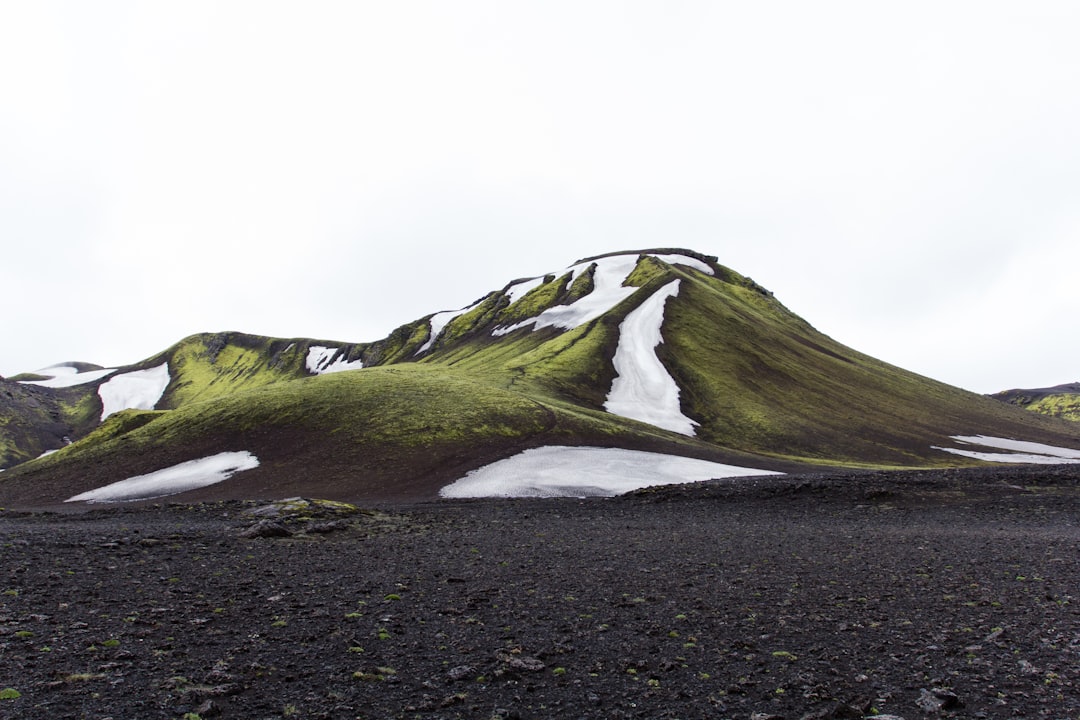
The Latest Seismic Activity: What Scientists Are Detecting
Iceland's Meteorological Office (IMO) has recorded intensifying micro-earthquake swarms beneath Hekla's magma system, with tremors clustering at depths between 1 and 3 kilometers — a classic signature of magma on the move. GPS ground deformation sensors installed around the volcano's flanks have shown measurable inflation, indicating that fresh magma is actively filling the shallow reservoir beneath the cone. Critically, the pattern of seismic signals includes both volcano-tectonic earthquakes, caused by rock fracturing, and long-period tremors, which scientists associate with fluid movement through volcanic conduits. Since Hekla's last eruption in February 2000, the mountain has been accumulating strain energy for over two decades — a gap that is historically unprecedented in the volcano's modern eruptive record. Researchers at the University of Iceland have noted that the stress buildup in the system now likely exceeds levels seen immediately before the 1970 and 1980 eruptions. Satellite InSAR data processed by the Copernicus Emergency Management Service confirms ground uplift of several centimeters across the summit area, consistent with a pressurizing magma body. While scientists stop short of declaring an imminent eruption, the convergence of these signals has placed Hekla at the top of Iceland's volcanic watch list.

🤔 Did You Know?
During Hekla's 1947 eruption, volcanic ash fell on Finland over 2,400 kilometers away within just 24 hours of the first explosion.
Hekla's Eruption History: A Pattern of Destruction
Hekla's eruptive record stretches back over 1,100 years to Iceland's first human settlement, and the pattern it reveals is both fascinating and deeply sobering. The volcano's most catastrophic known event was the 1104 AD eruption, a colossal plinian blast that buried an entire Norse farming district under meters of pumice and effectively depopulated a vast region of southern Iceland for generations. Between 1693 and 1947, Hekla erupted at intervals averaging roughly 40 years, but from 1970 onward the cycle accelerated dramatically, with eruptions in 1970, 1980, 1981, 1991, and 2000 — a startling increase in frequency. The 1947 eruption was particularly spectacular, sending a lava flow 9.3 kilometers long and producing an ash column that reached 30 kilometers into the stratosphere within hours of onset. Each period of volcanic quiet between eruptions tends to correlate with a more violent and explosive initial phase — meaning the current 24-year silence since 2000 suggests the next awakening could be among the most powerful in living memory. Volcanologists classify Hekla as a VEI 3-4 eruption system, meaning it can produce between 0.1 and 1 cubic kilometers of volcanic material in a single event. Archaeologists have used Hekla's distinctive ash layers — called tephra horizons — as precise time markers in ice cores from Greenland to the Alps, cementing the volcano's outsize historical footprint.

Why Hekla Gives Almost No Warning Before Erupting
Most major volcanoes announce their intentions weeks or even months in advance through escalating earthquake swarms, dramatic ground deformation, and surging gas emissions — Hekla plays by entirely different and far more dangerous rules. Instrumental monitoring of the 1991 eruption revealed that only 79 minutes passed between the first detectable seismic signal and the eruption breaking through the surface, stunning the volcanological community worldwide. This terrifyingly short lead time is explained by Hekla's unusually permeable conduit system — essentially, the volcanic plumbing is wide open, allowing magma to surge upward with minimal resistance and almost no preliminary warning pressure buildup. A 2018 study published in the journal Geophysical Research Letters found that Hekla's magma sits in a near-molten, critically pressurized state essentially at all times, ready to erupt the moment enough fresh material is injected from below. The volcano's shallow magma reservoir, located at depths of just 1-3 km compared to the 5-10 km depths typical of more predictable volcanoes, means the travel time from storage to surface eruption is measured in minutes rather than days. Icelandic emergency management protocols now mandate immediate closure of mountain access roads and airspace the moment any seismic anomaly is detected beneath Hekla — a precaution that acknowledges the volcano's refusal to give polite notice. This characteristic alone makes Hekla uniquely hazardous in a world where volcanic early warning systems are built on the assumption of at least several hours of precursory activity.

What a New Hekla Eruption Would Mean for Iceland and Europe
A major Hekla eruption in the current era would trigger cascading consequences reaching far beyond Iceland's borders, affecting everything from European air travel to global climate patterns. Immediately, pyroclastic flows and fast-moving lava could threaten the Ring Road — Iceland's primary highway — and ash fall would blanket agricultural land across the south of the country, threatening the livestock industry that contributes over 2 billion USD annually to Iceland's economy. Europe's aviation system remains acutely vulnerable: Hekla sits directly beneath the North Atlantic flight corridor used by hundreds of transatlantic flights daily, and even a moderate eruption producing a VEI-3 ash column could force closures of airports from Reykjavik to London. The fluorine content of Hekla's ash poses an existential threat to Iceland's sheep and cattle populations, as fluorine binds to grass and causes fatal skeletal fluorosis in grazing animals within days of exposure. A larger VEI-4 or greater event could inject sulfur dioxide into the stratosphere, potentially causing regional temperature drops of 0.2-0.5 degrees Celsius across the Northern Hemisphere for one to three years, echoing the 'Little Ice Age' cooling events tied to historical Hekla super-eruptions. Tourism, which accounts for approximately 8% of Iceland's GDP, would face severe disruption as the country's road and flight infrastructure adapts to the emergency. International scientists from the Global Volcanism Program are already running eruption scenario models to prepare coordinated response frameworks across Scandinavian and European civil defense agencies.

How Scientists Monitor Hekla 24/7
Iceland operates one of the world's most sophisticated volcanic monitoring networks, and Hekla sits at the center of a multi-layered surveillance system that never sleeps. The Iceland Meteorological Office maintains a dense ring of broadband seismometers around Hekla's base, capable of detecting micro-earthquakes as small as magnitude 0.1 — vibrations far too subtle for any human to feel but deeply informative to trained analysts. Continuous GPS stations measure ground deformation in real time, with millimeter-scale precision allowing scientists to track the inflation and deflation of the magma system as pressure changes below. Gas monitoring instruments measure sulfur dioxide and carbon dioxide emissions continuously, since spikes in these gases often precede eruptions by hours as rising magma degasses through the overlying rock. The European Space Agency's Sentinel satellite constellation passes over Iceland every six days, providing InSAR radar data that creates precise three-dimensional maps of ground movement across the entire volcanic zone. A dedicated fiber-optic tiltmeter network installed directly on Hekla's flanks can detect changes in slope angle as small as one microradian, equivalent to noticing a 1-millimeter height change across a distance of 1 kilometer. Despite all these technological marvels, the 79-minute eruption onset window means that even with perfect detection, emergency response teams face an almost impossibly tight timeline — a humbling reminder that nature often outpaces human ingenuity.

What Should Travelers and Locals Know Right Now?
Hekla remains one of Iceland's most popular hiking destinations, drawing tens of thousands of visitors annually to its otherworldly snow-and-lava landscapes, but current seismic unrest demands heightened awareness from anyone planning a visit. The Icelandic Meteorological Office maintains a real-time volcanic hazard page at vedur.is where travelers can check current alert levels before approaching the mountain — a step that should be considered non-negotiable given Hekla's notorious eruption speed. Iceland's Civil Protection Department has designated an exclusion zone of approximately 6 kilometers around Hekla's summit that can be activated within minutes of a warning, and local authorities have established emergency muster points along the Ring Road south of the volcano. Residents of towns including Hella, Hvolsvöllur, and Selfoss — all within 60 kilometers of Hekla's summit — are encouraged to maintain emergency kits with N95 particulate masks, goggles, and at least 72 hours of food and water, as ash fall can render outdoor movement hazardous and contaminate water supplies. Farmers in the Southern Lowlands are advised by the Icelandic Agricultural Advisory Centre to have livestock evacuation plans ready and to store emergency fodder supplies that have not been exposed to open air. Travel insurance policies for Iceland increasingly include volcanic eruption clauses, and visitors should verify coverage before departure. The bottom line: Hekla is magnificent and visitable, but it demands respect — this is a mountain that has ended civilizations before, and the ground beneath it is alive right now.

Final Thoughts
Hekla's renewed seismic heartbeat is a powerful reminder that our planet's most spectacular landscapes are also its most volatile — a sleeping giant that human civilization has circled warily for over a millennium is stirring once more. Whether the next eruption comes in months or years, the science is clear: when Hekla speaks, it will speak suddenly, loudly, and with consequences that ripple from Iceland's southern plains to the skies over Europe. Bookmark Iceland's Meteorological Office alerts, share this story with anyone planning a visit to Iceland, and remember — the most astonishing things on Earth are also the most untameable.
🌍 Explore More Earth Wonders
Frequently Asked Questions
Is Hekla volcano going to erupt soon in 2024?
While no eruption can be predicted with certainty, renewed seismic activity and ground inflation detected in 2024 indicate elevated unrest beneath Hekla. Scientists at the Iceland Meteorological Office are monitoring the situation closely, and the 24-year eruptive gap since 2000 is the longest in Hekla's modern recorded history, suggesting pressure is building.
How much warning does Hekla give before erupting?
Hekla is infamous for providing almost no warning — the 1991 eruption gave just 79 minutes between the first detectable seismic signal and the surface eruption. This is dramatically shorter than most volcanoes, which typically show days or weeks of escalating activity, making Hekla one of the most difficult volcanoes in the world to evacuate from safely.
Why is Hekla called the Gateway to Hell?
Medieval European scholars and clerics referred to Hekla as the 'Gateway to Hell' as early as 1120 AD, based on accounts from Norse settlers describing its terrifying eruptions, perpetual smoke, and the eerie sounds of wailing reportedly heard near the crater. The association persisted for centuries and was printed on maps across Europe, cementing Hekla's fearsome reputation.
📚 Further Reading & Research Sources
The following journals and institutions publish peer-reviewed research on the topics covered in this article:
🎉 Did this blow your mind?
Share it with someone who loves Earth’s wonders! What natural phenomenon do you want us to cover next? Leave a comment below.
Veðurstofa Íslands (Iceland Meteorological Office) / NASA Earth Observatory


Comments
Post a Comment